





三位一体論 全員経営のすすめ
――社長力・管理力・現場力
三位一体論 全員経営のすすめ ――社長力・管理力・現場力
日本企業の本音を語る
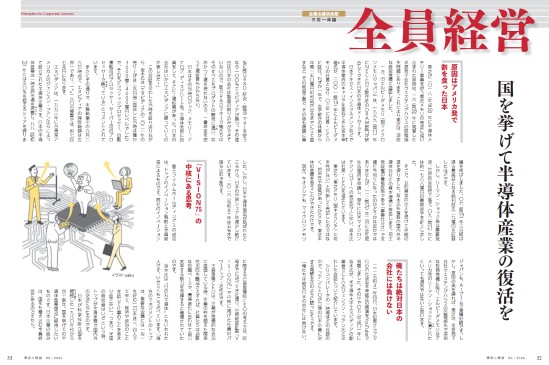
富士フイルムホールディングスの見事な再生と比較してはいけませんが、半導体メモリー大手キオクシアホールディングス(旧東芝メモリ。以下、キオクシア)の時価総額が6月22日、一時60兆円を超えました。6月25日の株価は10万3850円です。この数字を見ると、かつての半導体産業の黄金期を知っている昭和世代としては、実に複雑な気持ちになります。
国を挙げて半導体産業の復活を
原因はアメリカ発で割を食った日本
東芝が二〇一八(平成30)年に半導体メモリー事業を担う東芝メモリの売却に追い込まれた原因は、一六(同28)年に発覚した米原発子会社ウエスチングハウスの巨額損失問題にあります。これにより東芝は、深刻な経営危機に直面しました。
一方、旧エルピーダメモリ(現マイクロンメモリジャパン)は、一九九九(同11)年にNECと日立製作所のDRAM部門が統合してできた日本の半導体メーカーです。
日本テキサス・インスツルメンツなどで半導体業界のキャリアを重ねてきた坂本幸雄氏が、二〇〇二(同14)年にエルピーダメモリの社長となり、〇三年に社長・CEOに就任。
わずか一年で、赤字続きの体質から年間一五〇億円の利益が出るまでに立て直すなど、その経営手腕で、その後も順調に業績を伸ばしました。〇七(同19)年三月期は過去最高益となる純利益五二九億円を記録したほどです。
しかし、リーマン・ショック後は需要低迷、世界的な価格下落で、〇九(同21)年には約一七八八億円の最終赤字を計上しました。
本記事は、月刊『理念と経営』2026年9月号 「三位一体論 全員経営のすすめ ――社長力・管理力・現場力」 から抜粋したものです。
【以下、英訳の文章です】
Speaking Candidly About Japanese Companies
Although it may not be appropriate to compare it with the remarkable turnaround achieved by Fujifilm Holdings, the market capitalization of Kioxia Holdings Corporation, a major semiconductor memory manufacturer formerly known as Toshiba Memory, temporarily exceeded 60 trillion yen on June 22. Its share price stood at 103,850 yen on June 25.
For those of us from the Showa generation who remember the golden age of Japan’s semiconductor industry, seeing these figures evokes deeply mixed feelings.
A Nationwide Effort to Revive Japan’s Semiconductor Industry
Japan Bore the Brunt of a Crisis Originating in the United States
The reason Toshiba was forced to sell Toshiba Memory, its semiconductor memory business, in 2018 can be traced to the massive losses at its U.S. nuclear power subsidiary, Westinghouse, which came to light in 2016. As a result, Toshiba faced a severe management crisis.
Meanwhile, the former Elpida Memory, now Micron Memory Japan, was a Japanese semiconductor manufacturer established in 1999 through the integration of the DRAM operations of NEC and Hitachi.
Yukio Sakamoto, who had built his career in the semiconductor industry at companies including Texas Instruments Japan, became president of Elpida Memory in 2002 and assumed the role of President and CEO in 2003.
In just one year, he turned around the chronically loss-making company to the point where it was generating an annual profit of 15 billion yen. Under his leadership, the company continued to achieve steady growth.
For the fiscal year ended March 2007, Elpida recorded a record-high net profit of 52.9 billion yen.
However, following the global financial crisis, weakening demand and a worldwide decline in semiconductor prices severely affected the company. In 2009, Elpida posted a net loss of approximately 178.8 billion yen.
This article is excerpted from the September 2026 issue of the monthly publication Philosophy and Management,
“The Growth Principles of Companies: The Trinity Approach — The Practice of Total Participation Management.”
成功事例が豊富に掲載
詳しく読みたい方はこちら
《無料メールマガジン》
〜お役立ていただける情報を定期的にご提供〜
メルマガ『理念と経営News』を配信いたします。
※弊社グループ会社からのメルマガ配信登録も、同じフォームから可能です。